Landmannalaugar Without a Tour
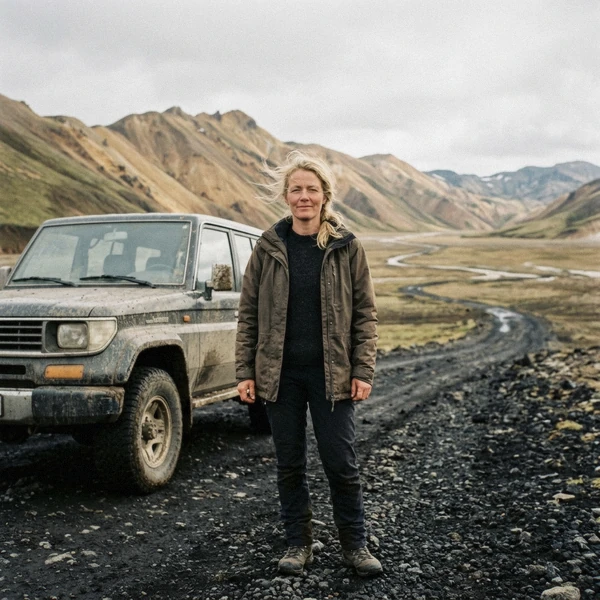
Yes, you can visit Landmannalaugar without a tour. Nothing about the valley requires a guide: there is no permit, no checkpoint and no rule keeping individuals out. What there is instead is a legal restriction on the road and a gap in every rental insurance policy sold in Iceland, and those two facts decide whether driving yourself is sensible or expensive. This page sets out where the DIY route works, what it really costs as of July 2026, and the point at which paying somebody else to drive stops being laziness.
Quick answer
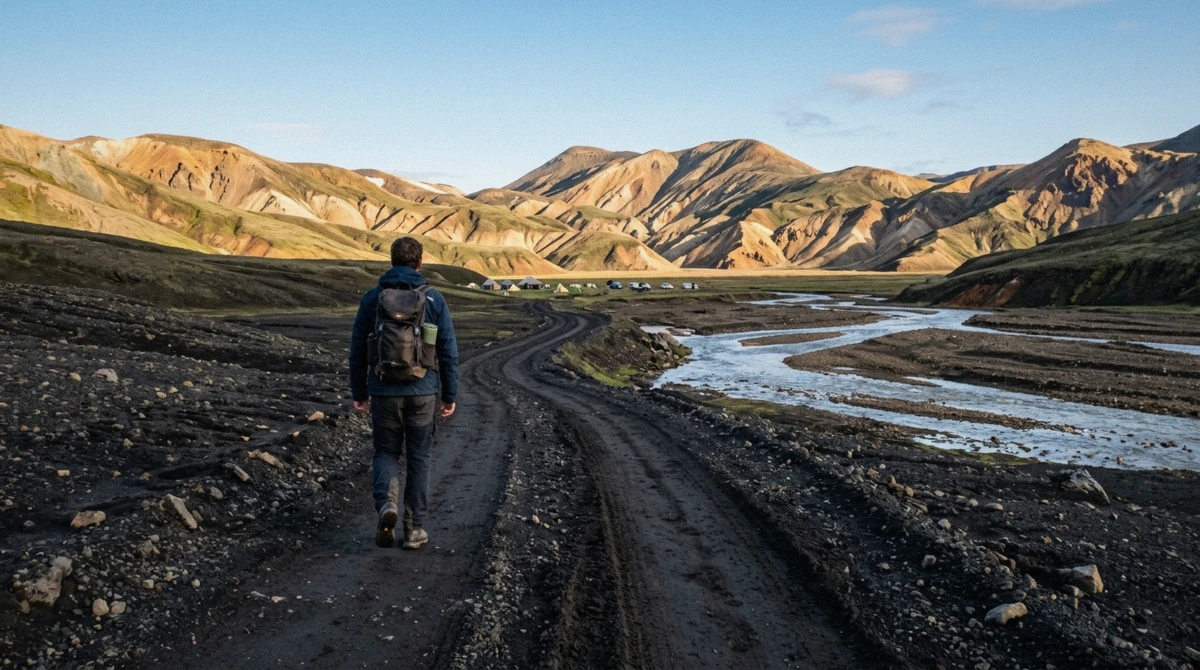
You can reach Landmannalaugar on your own in two ways: driving a 4x4 up the F-roads, or taking the scheduled highland bus from Reykjavik. There is no guide requirement anywhere in the Fjallabak Nature Reserve. The catch is that Icelandic law allows only 4x4 vehicles on F-roads, no rental car insurance sold in Iceland covers water damage from a river crossing, and the two largest fords sit on F224 within sight of the campsite.
Key takeaways
- No permit and no guide are required: the valley is public land with marked trails and a free hot spring
- Driving yourself is legal only in a 4x4, and a two-wheel-drive car voids its cover the moment it passes the F-road sign
- The uninsured risk is the river crossings, not the gravel: a drowned engine is entirely your bill
- The bus is the genuinely easy DIY route, from 12,220 ISK one way, and it gives about five hours on the ground
- A self-drive day costs roughly $170 to $240 for the vehicle, so it only beats a tour with three or four people sharing
- Parking must be reserved through parka.is for arrivals between 09:00 and 16:00, from 20 June to 13 September 2026
The Short Answer: Do You Need a Tour?
No, but the road decides whether you should
Landmannalaugar sits inside the Fjallabak Nature Reserve on public land. Anyone can walk the trails, bathe in the hot spring and camp there, and the fees involved are small. Nothing in the rules mentions guides.
The rule that actually governs the answer is a driving one. Every route in crosses F-roads, and Icelandic law allows only 4x4 vehicles on F-roads. Beyond that, off-road driving anywhere in Iceland is illegal and carries heavy fines, so the marked track is the only track, however tempting the flat gravel beside it looks.
So the honest verdict is this: if you have a proper 4x4, some experience of unpaved mountain roads and a group to split the cost with, drive. If any of those three is missing, take the bus or take a seat on one of the guided Landmannalaugar tours and spend the day looking out of the window instead of at the water.
DIY vs Tour at a Glance
The two columns, honestly filled
Both sides get the same level of detail, because the point of this page is to help the DIY route succeed where it makes sense.
| On your own | With a tour | |
|---|---|---|
| Cost per person | $170 to $240 for the vehicle and day, split between you; from 12,220 ISK one way on the bus | $189 to $395 per person, everything included except food |
| What you can reach | Everything, plus the stops you choose and the hours nobody schedules | The campsite plus the operator's fixed stop list, typically two to five extras |
| Gear | Your own boots, layers and food; the vehicle is your problem | Your own boots, layers and food; the vehicle is theirs |
| Safety and backup | You read the river yourself, and recovery in the highlands is slow and expensive | A local driver who has crossed that ford this week and a company behind them |
| Time and flexibility | Total: leave when you want, stay until evening, walk the full loop | Three to five hours on the ground, fixed, and the vehicle leaves when it leaves |
| Best for | Groups of three or four with highland driving behind them | Solo travellers, couples, first-timers, and anyone visiting in the shoulder weeks |
The row that decides it
Time and flexibility is where DIY genuinely wins, and it wins by a lot. Five hours on the bus or a full self-driven day turns the 9.7 km loop over both peaks into something you can actually walk, where a guided three hours does not.
Safety and backup is where the tour wins, and it wins in one specific place: the water. Everything else on that table is a preference.
The Routes In, and What Each One Costs You in Water
F208 north with F225, the standard approach
Off Route 26, this is the line almost every operator uses and the one to take if you are driving yourself for the first time. It is shorter than the southern alternative and carries less water. F225, Landmannaleið, joins it as a scenic variant that some operators prefer.
What it does not spare you is the finish. The last few kilometres are F224, and the two largest crossings of the whole route sit on it, within sight of the campsite.
F208 south from near Vík, the long way
Longer, emptier and considerably wetter. The first significant crossing, near the Hólaskjól hut, runs roughly 40 to 60 cm deep in average summer conditions, and there are several more after it. Depths climb through the afternoon as the day's meltwater arrives, so a ford that was manageable at ten in the morning can be a different proposition at four.
This route rewards a high vehicle and experience. It is not the one to learn on.
The last two fords, and the footbridge that solves them
Whichever way you come, F224 ends with the two biggest crossings on the route. Plenty of self-drivers stop short of them, park in the outer area and walk the final ten minutes over the footbridge into the campsite. It costs nothing, it takes ten minutes, and it removes the single largest financial risk of the whole day.
If you are in a rental and you are hesitating at the water, that hesitation is correct. Park and walk. Driving around a ford is one of the twelve mistakes worth avoiding, and an illegal one.
Why the insurance gap matters more than the road
Every standard and premium rental insurance product sold in Iceland excludes water damage from a river crossing. A couple of small companies have started covering it, and they are the exception that shows how the market reads the risk. If water reaches the engine, the transmission, the electrics or the interior, you pay for the repair, the recovery and the days the vehicle is off the road.
That is the entire case against driving yourself, and it is a narrow one. It does not apply to the bus, and it does not apply on a tour.
The Route and the Stops You Can Make on Your Own
Driving yourself means you choose the stops. These are the ones worth building into the day, in the order you meet them coming from Reykjavik on the northern approach.
What DIY Really Costs
The line items for a self-driven day
Based on a 360 km round trip from Reykjavik in a 4x4 whose rental contract permits F-roads, with fuel around 215 ISK a litre in July 2026.
| Line item | Cost | Note |
|---|---|---|
| 4x4 rental, one day | $47 to $150 | The cheap end is a small SUV outside August; the peak-month average is far higher |
| Fuel, 360 km | About 7,700 ISK | Roughly 36 litres. Fill in Hella, not in the highlands |
| Parking | 1,500 ISK | Car up to five seats, plus a parka.is reservation for 09:00 to 16:00 arrivals |
| Food for the day | 2,000 to 4,000 ISK | Bought before you leave, since nothing is sold in the valley |
| Shower, optional | 1,100 ISK | In the block by the campsite |
| Total, the vehicle and the day | $170 to $240 | Divided by however many of you are in the car |
The party-size maths, done properly
Take $200 as the typical total. Alone, that is $200 against a $189 guided seat, and there is no saving at all. Two people pay $100 each, which is $89 better than the cheapest tour but carries the uninsured crossings. Three pay about $67 each and four pay $50, and at that point the case for driving is real.
The bus sits outside this arithmetic entirely. At around 12,220 ISK one way it costs roughly $97 each way regardless of group size, so it beats renting for one or two people and loses to it for four. It also hands you five hours in the valley rather than three. The tour side of the comparison is in what a Landmannalaugar trip costs, with the hut and camping fees added.
When Skipping the Tour Is the Right Call
Four situations where DIY is genuinely better
No hedging here. If you recognise yourself in these, drive or take the bus and keep the money.
- You are three or four people sharing one rental, which cuts the vehicle cost to $50 to $67 each
- You have driven unpaved mountain roads before and are comfortable reading a river rather than guessing at one
- You want the full 9.7 km loop over Bláhnúkur and Brennisteinsalda, which takes four to six hours and does not fit a guided day
- You are camping or starting the Laugavegur, in which case the bus is the obvious answer and a tour makes no sense at all
And four where it is not
Equally plainly.
- You are travelling alone or as a couple, where the rental costs more than the tour seats
- You are visiting in the first or last fortnight of the season, when conditions are least predictable
- You have never driven a ford and would be doing it for the first time with an excess you cannot afford
- Rain has been falling for a day or more, which raises every crossing on the route
Which Way In Fits You
If You are four people sharing one rental
Drive: about $50 each, which is the only combination that clearly beats a guided seat
If You are travelling alone or as a couple
Take the bus or a tour: a day's 4x4 costs more than the seats would
If You want the full 9.7 km loop over both peaks
The bus, at five hours on the ground, or camp overnight. No guided day allows the time
If You have never crossed a ford
Park before the last two crossings and walk the footbridge, or let somebody else drive
If You are starting the Laugavegur trail
The bus, and book a hut bed or a campsite pitch months ahead
If You are visiting in late June or mid September
A guided super jeep: the shoulder weeks are where local judgement about the road is worth most
The Middle Option: the Highland Bus
Somebody else drives, nobody guides you
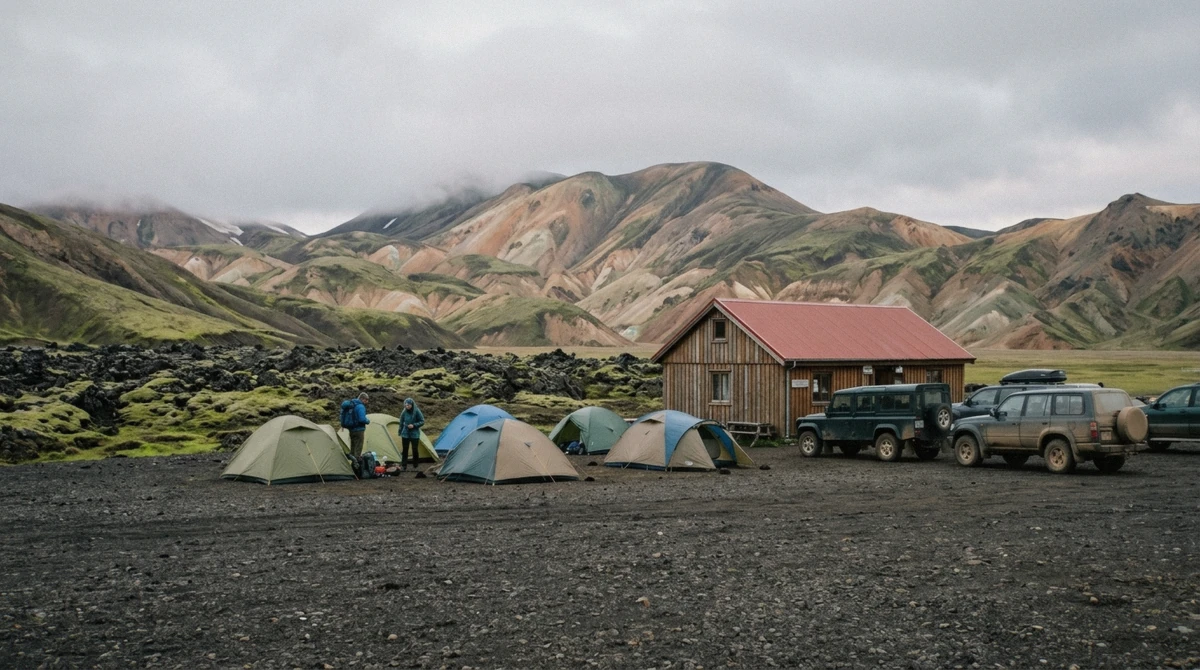
The scheduled bus is the DIY route most people overlook. It runs through the summer from Reykjavik, stops at Hella on the way, and puts you at the campsite in the late morning with the return leaving mid-afternoon. That is around five hours on the ground, comfortably more than any guided day, and it removes the fords, the insurance question and the parking booking in one move.
What you give up is a guide, hotel pickup and any margin for error: miss the return and you are camping. Tickets must be booked ahead and sell out in peak season. Both operators and their timetables are set out in how to get to Landmannalaugar from Reykjavik.
If You Are Driving: the Practical Checklist
Before you set off
Everything here takes minutes and prevents the expensive version of the day.
- Confirm in writing that your rental is permitted on F-roads, and read what its policy says about water damage
- Check road status on umferdin.is the morning you travel, not the night before
- Book the parking slot on parka.is if you will arrive between 09:00 and 16:00 between 20 June and 13 September
- Fill the tank in Hella: there is no fuel between there and the valley
- Pack lunch, water, boots, waterproofs and a swimsuit, because nothing is sold at the far end
- Agree with yourself in advance that you will park before the last two fords and walk the footbridge
- Aim to arrive before midday, when the crossings are at their lowest for the day
A simple self-driven day
Leave Reykjavik at seven and you are in Hella by half past eight with a full tank and lunch in the boot. The gravel starts after that, and with two short stops at Hnausapollur and Frostastaðavatn you reach the campsite around eleven, before the day tours arrive.
Walk Brennisteinsalda first, 6.5 km and two to three hours, then eat, then take the hot spring in the middle of the afternoon as the guided groups start heading for their vehicles. Leaving at five puts you back in the capital around nine, with the crossings behind you in daylight.
The trail detail, including the harder Bláhnúkur option, sits in our guide to the two hiking day tours, which walks the same ground.
Questions About Going on Your Own
Can you get to Landmannalaugar without a 4x4?
Not in your own vehicle. Every route in crosses F-roads, and Icelandic law allows only 4x4 vehicles on those, so a two-wheel-drive car is not permitted and taking one voids its insurance from the sign onward. There is one way in without a 4x4 of your own: the scheduled highland bus from Reykjavik, which runs through the summer from around 12,220 ISK one way and drops you at the campsite. A guided tour has the same effect for more money and adds a guide.
Can you drive through Landmannalaugar?
You drive to it, not through it. F224 ends at the parking area beside the campsite and there is no road out the other side toward Þórsmörk, which is walking country: the Laugavegur trail covers those 55 km over about four days. Within the valley itself the only movement is on foot. Off-road driving anywhere in the Fjallabak Nature Reserve is illegal and carries heavy fines, so the marked track and the car park are the whole of it.
Do you need a permit or a guide for Landmannalaugar?
Neither. There is no permit system, no entry gate and no requirement to be accompanied. The valley is public land with marked trails, a free hot spring, a campsite and a mountain hut. The only compulsory booking is parking, and only for vehicles arriving between 09:00 and 16:00 from 20 June to 13 September 2026, which is handled through parka.is.
How deep are the river crossings to Landmannalaugar?
It varies by route and by hour. The first significant ford on the southern F208 approach, near the Hólaskjól hut, runs roughly 40 to 60 cm deep in average summer conditions. The two largest crossings on the whole route sit on F224 immediately before the campsite. All of them rise through the afternoon as the day's meltwater comes down, and they rise sharply after rain, so a morning arrival is easier than an evening one. Many self-drivers simply park before the last two and walk the footbridge.
Is it cheaper to visit Landmannalaugar without a tour?
Only with three or four people in the car. A self-driven day costs roughly $170 to $240 for the vehicle including rental, fuel, parking and food, which works out at $200 for one person, $100 each for two, and around $50 each for four. The cheapest guided seat is $189. So a solo traveller saves nothing, a couple saves a little while carrying the uninsured river risk, and a group of four clearly wins.
When do the roads to Landmannalaugar open?
Usually around 20 June, and they close around 15 September, with the road authority setting the exact dates each year after inspecting the route. A cold spring pushes the opening into July and an early snowfall can close things in the first week of September. Nothing is published far in advance, so check umferdin.is on the morning you plan to drive. The full month-by-month picture is in the best time to visit Landmannalaugar.
Can you camp anywhere in Landmannalaugar?
No, only at the marked campsite, which costs 3,400 ISK per adult per night with reduced rates for children aged 7 to 17 and free entry for under-sevens. Wild camping is not permitted in the reserve. The fee covers toilets, drinking water, a grill and a bench, with showers charged separately at 1,100 ISK. Campervans have designated spots, though the vehicle still has to be one you are allowed to take up an F-road.
Driving yourself here is a reasonable thing to do, and we would rather you did it well than not at all. Take a proper 4x4, go in the morning, split the cost three or four ways, and park before the last two crossings. If any part of that sentence gives you pause, the bus does the same job for around 12,220 ISK and leaves you with five hours in the valley and nothing to worry about at the water.